Risk prevention · Automotive dealerships
Auto Theft: Is Your Dealership Adequately Protected?
Auto theft is not what it used to be. A few decades ago, forcing open a door, breaking a window, or hot-wiring a vehicle were common methods. Today, vehicles have become computers on wheels, and thieves have evolved their techniques along with them.
For automotive dealerships, this transformation in risk is particularly significant. A dealership may have dozens or even hundreds of new, used, demonstration, or customer-owned vehicles in one location. This concentration of assets can represent an attractive target for organized criminal groups.
Fast, discreet, and technology-driven theft
Modern vehicle theft is often much faster and less noticeable than it once was. Some methods even allow thieves to drive away with a vehicle without possessing the original key or leaving obvious signs of forced entry.
Some of the techniques being used today include:
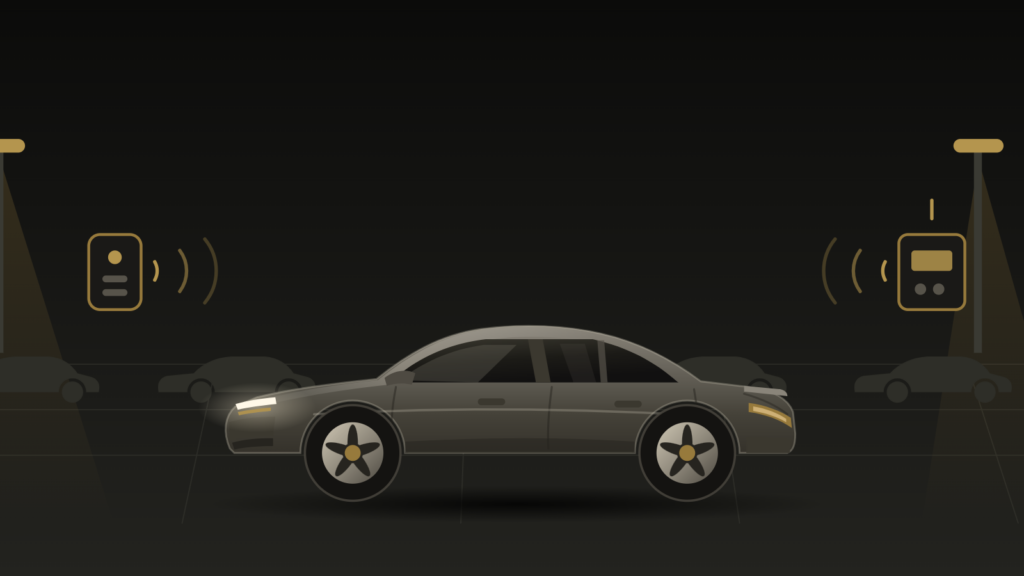
Key fob relay attacks. Electronic devices can capture and relay the signal from a nearby smart key. The vehicle then believes the legitimate key is present, allowing it to be unlocked or started.
CAN bus manipulation. Modern vehicles use the CAN bus to allow different electronic modules to communicate with one another. By accessing certain circuits, criminals may attempt to inject false commands to unlock or start the vehicle.
Programming new keys through the OBD port. The diagnostic port legitimately used by technicians can also be misused. Under certain circumstances, programming tools can be used to make the vehicle recognize a new key.
Communication jamming. Certain devices can temporarily interfere with locking, telematics, or tracking signals. A driver may believe the vehicle has been locked when the locking command was never actually received.
More traditional methods also remain a threat, including fraudulent towing, forced entry, and the theft of high-value vehicle parts.
Why should dealerships be particularly concerned?
Criminals do not necessarily choose vehicles at random. Demand in resale markets, particularly overseas, the value of replacement parts, the popularity of a particular model, and its resale potential can all influence which vehicles are targeted.
For dealerships, this means the risk is not limited to a few high-end models. The entire vehicle inventory deserves a consistent protection strategy.
Customer vehicles entrusted to the dealership also require particular attention. A theft that occurs while a vehicle is under the dealership’s responsibility can result not only in a financial loss, but also in a significant impact on the customer relationship.
Demonstration vehicles can also be targeted. Thieves may pose as prospective buyers to gain access to a vehicle and use a test drive as an opportunity to steal it. It is therefore important to establish appropriate test-drive procedures, verify customer identification, and implement measures to track and secure demonstration vehicles.
Once a vehicle is stolen, every hour can count
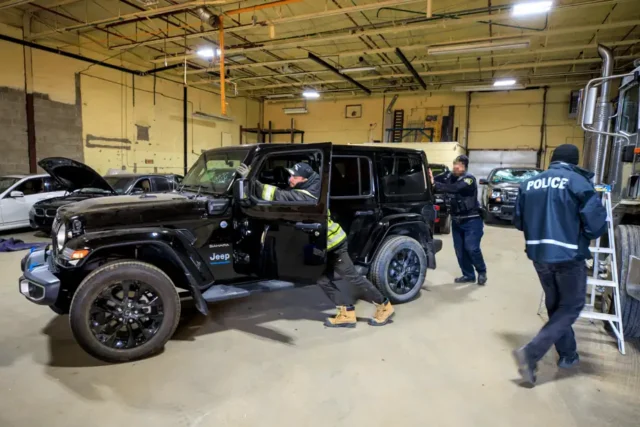
A significant portion of vehicles stolen in Canada are destined for resale elsewhere. Organized criminal networks can quickly move a vehicle to a temporary storage location and then to a shipping terminal.
The vehicle may then be concealed inside a shipping container among legitimate cargo before being exported overseas.
Other stolen vehicles may instead be dismantled so their parts can be sold separately. Engines, transmissions, headlights, electronic components, wheels, and other valuable parts can generate significant revenue for criminal networks.
This reality highlights why the ability to quickly detect a theft and initiate recovery efforts can make an important difference.
The importance of layered protection
No single technology or theft-protection measure can completely eliminate the risk of vehicle theft.
The most effective approach is therefore to combine multiple security measures, often referred to as layered protection.
A comprehensive strategy can pursue four complementary objectives:
Objective 01
Deter.
Make the vehicle or dealership less attractive to thieves.
Objective 02
Delay or prevent.
Create obstacles that increase the time and effort required to steal the vehicle.
Objective 03
Detect.
Quickly identify when a vehicle is moved or when unusual activity occurs.
Objective 04
Recover.
Have a solution in place to help locate a vehicle if a theft does occur.
For dealerships, this can mean combining several measures: strict control over key access, OBD port protection, well-lit and secure parking areas, electronic monitoring, and technologies designed to support theft detection and vehicle recovery.
Review internal procedures as well
Technology, however, is only part of the solution.
Some relatively simple organizational measures can help reduce a dealership’s exposure:
Dealership checklist
- Limit and document access to vehicle keys;
- Conduct periodic inventories of keys and vehicles;
- Pay particular attention to recently acquired and used vehicles;
- Establish clear procedures for demonstration vehicles;
- Quickly investigate any irregularity or unauthorized vehicle movement;
- Document the anti-theft devices installed on each vehicle;
- Educate employees about current vehicle theft methods.
Effective security depends just as much on everyday practices as it does on the equipment installed.
Moving from a reactive to a preventive approach
The key lesson from the evolution of auto theft is simple: traditional security practices may no longer be enough on their own.
Vehicles are becoming smarter, but so are the methods used to steal them. For dealerships, the objective is therefore no longer simply to react when a vehicle disappears. It is about reducing opportunities for theft, making vehicles more difficult to steal, quickly detecting unusual activity, and increasing the likelihood of recovery.
Faced with a threat that is fast, technology-driven, and increasingly organized, combining multiple layers of protection remains the best defense.